
Paediatric Dentistry in Sant Just Desvern
We look after today’s smiles to build tomorrow’s oral health
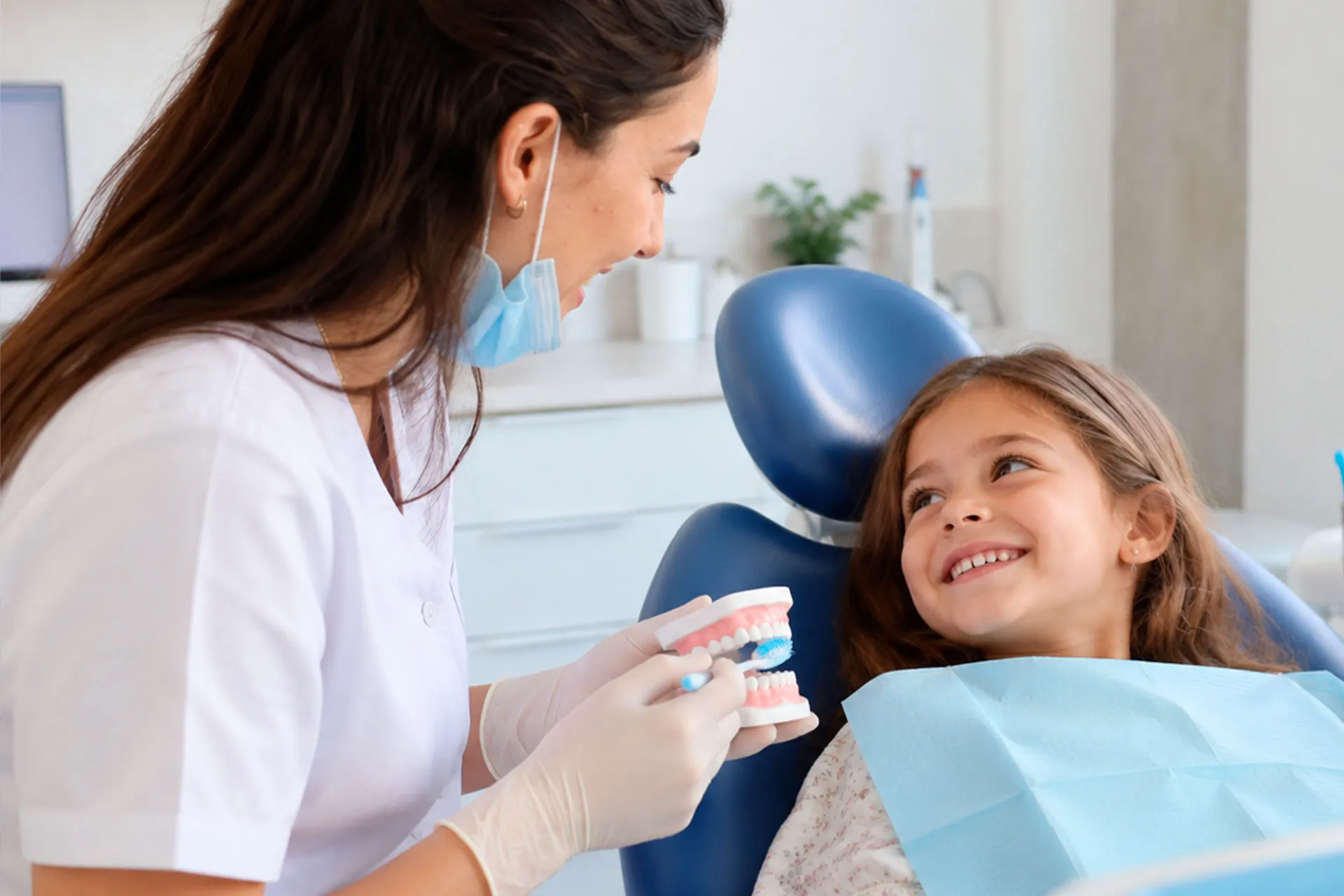
Lasting health
Childhood is a crucial stage in the development of oral health. The habits formed during the early years of life, together with appropriate professional care, have a direct influence on oral health during adolescence and adulthood.
Paediatric dentistry is the specialism responsible for preventing, diagnosing and treating oral health problems in babies, children and adolescents, tailoring each treatment to the specific needs of each stage of growth.
At VARCHI Dental Clinic, we understand that a visit to the dentist during childhood can shape the relationship a person will have with dentistry throughout their life. That is why we strive to ensure that every experience is positive, welcoming and tailored to each child’s pace. Our aim is not simply to treat teeth. We want to support families in developing healthy habits, prevent future problems and help little ones grow up with a healthy, functional smile, free from any fear of the dentist. Every child is different and deserves personalised care based on trust, patience and respect.
What is paediatric dentistry?
Paediatric dentistry is the branch of dentistry specialising in the oral healthcare of children and adolescents, from the first few months of life until the end of their growth. As well as treating dental problems as they arise, paediatric dentistry has a strong focus on prevention and education.
Throughout the various stages of development, there are continuous changes in dentition, facial growth and bite.
It is therefore essential to carry out regular check-ups to enable any problems to be detected at an early stage.
The paediatric dentist not only looks after milk teeth and permanent teeth, but also monitors proper oral development, advises families and promotes healthy habits that will stay with the child throughout their life.
Solutions
Common treatments in paediatric dentistry
Each stage of growth presents different needs. Our aim is to tailor treatments to each child’s age, development and clinical condition.
Dental check-ups and monitoring of dental development
Regular check-ups enable us to monitor the eruption of teeth and detect any potential problems at an early stage. During these appointments, we assess the health of your teeth and gums, the development of your bite and the overall development of your mouth.
Dental cleanings and oral hygiene education
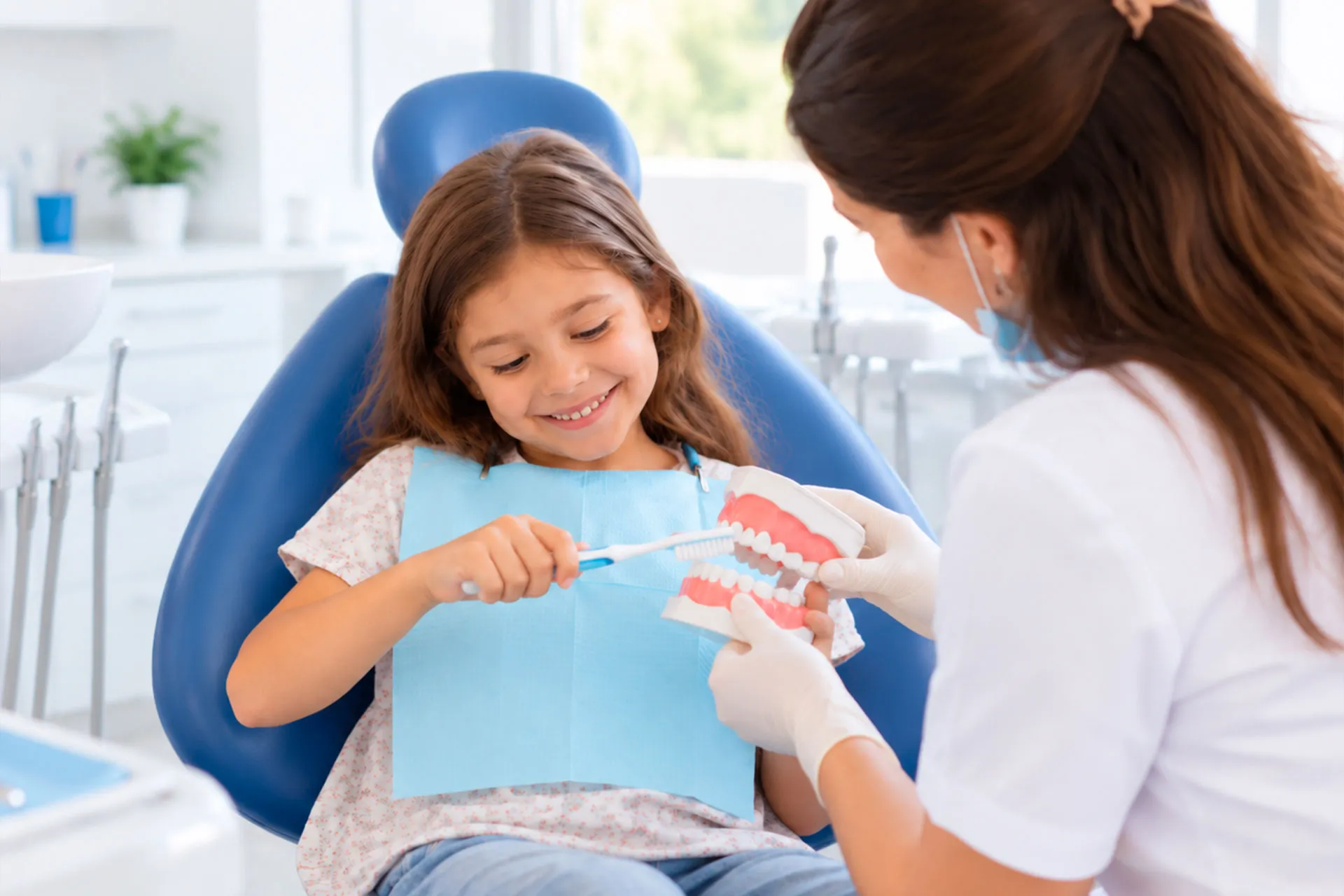
Oral hygiene is one of the most important ways to prevent dental disease. During appointments, we teach brushing techniques tailored to each age group and reinforce habits that help maintain a healthy mouth.
Treatment of childhood tooth decay
When a cavity develops, the aim is to treat it using a conservative approach in order to preserve the function and health of the affected tooth. Early detection usually means that treatment is simpler and more comfortable for the child.
Monitoring growth and bite development
Childhood is the ideal time to identify abnormalities in the development of the jaws and the position of the teeth. Early detection can lead to simpler treatments and prevent future problems.
Instructions
When should a child have their first visit to the dentist?
Leading scientific societies recommend that children have their first dental check-up during their first year of life or after their first teeth have come through.
Prevention: the cornerstone of paediatric dentistry
The best way to treat many dental conditions is to prevent them from developing in the first place. Prevention is therefore one of the cornerstones of modern paediatric dentistry.
Through regular check-ups, we can monitor the development of children’s teeth, identify risk factors and take action before more complex conditions develop. We also work closely with families to promote good oral hygiene habits, a healthy diet and daily dental care.
Prevention not only reduces the need for future treatment, but also helps children develop a more positive attitude towards looking after their oral health.
Protocol
How do we identify orthodontic problems in young children?
An early assessment enables us to monitor a child’s dental and jaw development and detect any potential problems before they progress.
Growth assessment
We examine how the jaws are developing and the position of the teeth during the various stages of growth.
Early detection
Identifying problems early on does not mean starting treatment straight away, but rather being able to monitor the situation properly.
Personalised support
We monitor the progress of each case to determine the most appropriate time to take action, if necessary.
Treatment at the right time
Interceptive orthodontics and dentofacial orthopaedics make it possible to take advantage of growth to correct certain abnormalities more easily.
First orthodontic check-up
We recommend that an assessment be carried out at around 6 or 7 years of age, even when development appears to be normal.
Advantages
Benefits of paediatric dentistry
At VARCHI, we support children’s oral health from the very earliest stages, focusing on prevention and monitoring as they grow.
01/
Prevention and early detection
It enables the identification of tooth decay, abnormalities in tooth eruption or other problems before they progress, making treatment simpler.
02/
Healthy habits from an early age
Regular visits help to teach good hygiene habits and to understand the importance of looking after your teeth from an early age.
03/
A positive experience
Getting used to visiting the doctor from an early age helps to reduce fear and anxiety, making future visits feel more natural.
04/
Monitoring dental growth
Proper monitoring during growth helps to promote the harmonious development of the teeth and smile.
FAQs
Your dental practice
Why choose VARCHI Dental Clinic for your child’s dental care?
At VARCHI, we believe that paediatric dentistry should combine clinical expertise, prevention and a caring approach. We take on this responsibility with dedication, commitment and enthusiasm.
Book your appointment at VARCHI
We’ll assess your situation and clearly explain all the options available to help you regain your smile.